Magpul and MeatEater Link Up to Fill the Freezer with Feral Filets
We leaned against dusty tailgates, sipping coffee as thunderheads swallowed what should’ve been a hell of a sunset. The plan was simple: ready the guns, load up the gear, and track down some invasive swine. We get to hunt hogs a lot in the south, but this time the MeatEater crew joined us to see how Magpul gets it done in East Texas. Our goal was to have a good time with the MeatEater crew and get a taste of some of the best free–range pork in the lower 48.
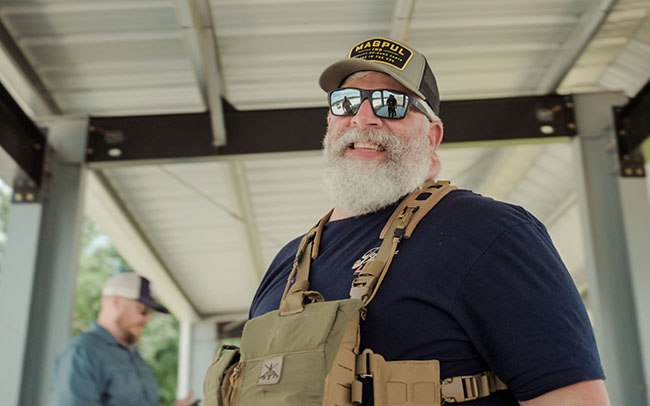

Brent Reeves, Garret Long, and Matt Miller of MeatEater have successfully hunted for just about everything, everywhere, and many times with a lot less specialized gear. This time, though, we brought SR–25s, SIG MCXs, and mixed calibers that were made deadly effective in the dark with our Magpul accessories and high–quality thermal optics from Pulsar and SIG. The team at Pulsar set us up nicely for the evening hunt, and we got right into it by confirming zeros on all the guns and running through our gear checks. We had heard the MeatEater boys could shoot, and they proved it on the range before the hunt, stacking hits at 1,000 yards like they were straight putts on a flat green.
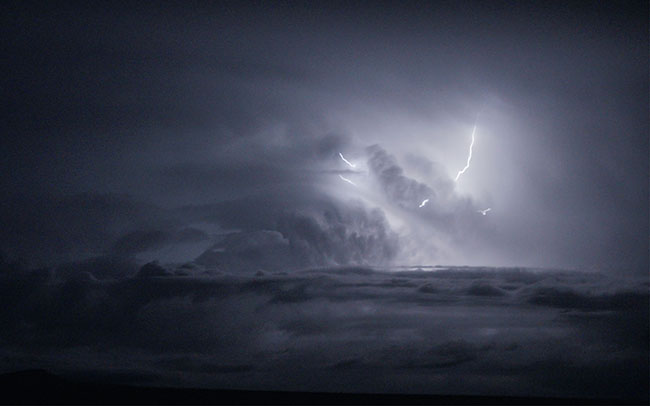
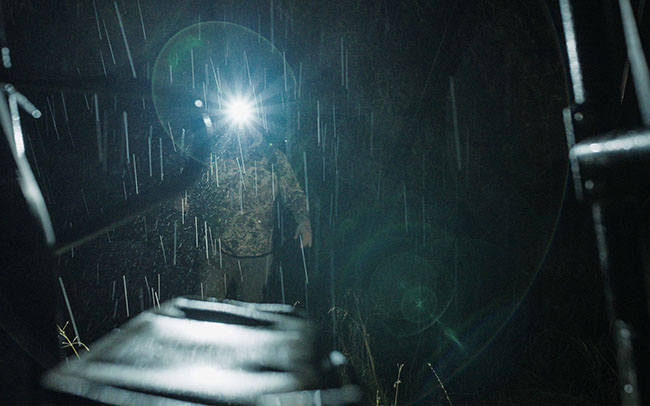
After the range, we decided to spend the first evening in blinds spread out across the 7,000 acres of low-fence property at Sellmark Ranch. By sundown, the weather was beginning to turn foul everywhere, so we stayed in the blinds while the rain came in sideways. At first, the hogs weren’t moving around much, but Garret — who is clearly a sort of invasive species savant — managed to drop six pigs before the worst of the storm arrived. The power of a Texas storm is undeniable, and we had serious doubts about venturing out on a long stalk to address the thriving wild hog population. As a result, we brought back the wild swine we’d taken down and processed them for the next day’s meal.
The next morning, a few of us caught the sunrise, but the smart ones stayed in bed. By midday, we swapped stories and kicked around the kind of challenges every hunter runs into. Solving those kinds of problems is what we live for at Magpul. As the evening progressed, the afternoon was filled with great food and a spirited debate on the best ways to cook and serve wild pigs.
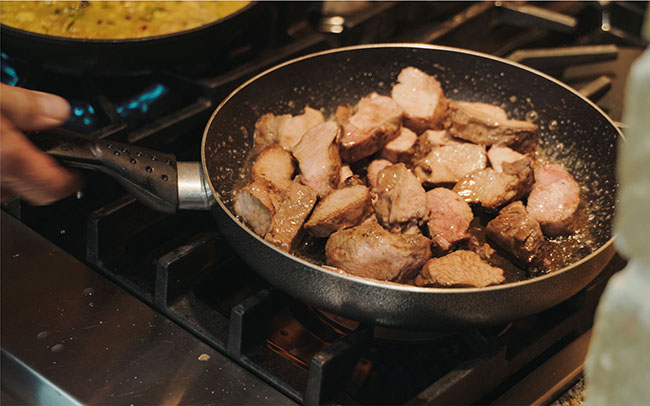
Duane took over the cooking and made quick work of a young sow. Wild pigs share the same DNA as their domesticated counterparts, but without most of the fat we’re accustomed to in the store-bought version. Their meat can be tough and needs to be prepared in a way that brings out the tenderness, but when you do that, it’s worth it. After turning the sow into a work of culinary art, we ate and got ready to get after it again. This time, we were ready to cull some hogs in their invasive — but more natural — habitat.

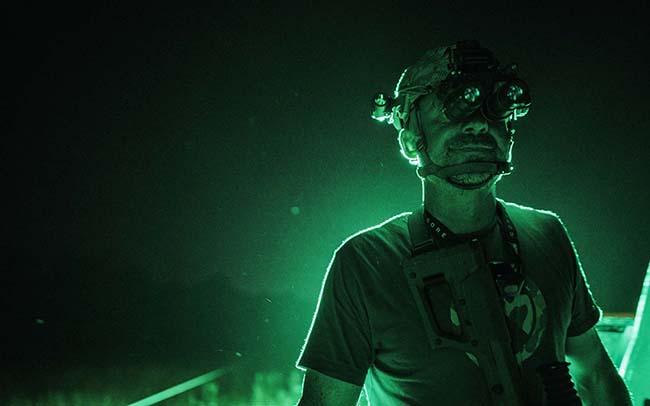
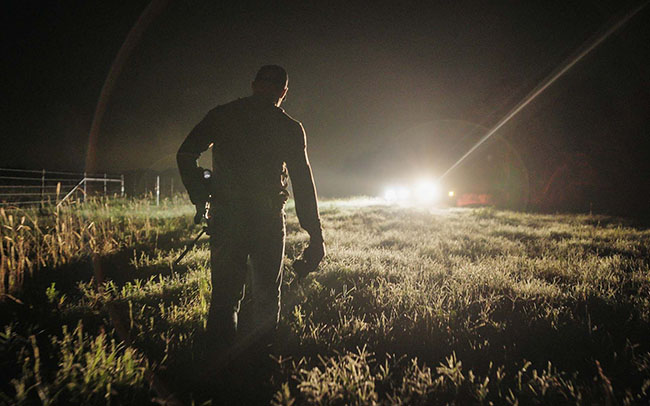
The previous night’s storms were long gone, and we had clear skies as we set up our plan. The night hunt started with a little time in the blinds until it got really, really dark. After that, we transitioned to what we were really excited to do — some spot-and-stalk, boots on ground action (with some help covering long distances with some IR-equipped side-by-sides). Once we dismounted, we crept though brush and darkness, continuously scanning the woods and the horizon for feral beasts; we were slow and deliberate in our search of potential night-time quarry. We put in a lot of miles of stalking without much action, except for Brent cracking jokes and us trying not to blow the stalk by laughing. A frustratingly quiet night looked like it might end with only one pig and a lone coyote dropped.
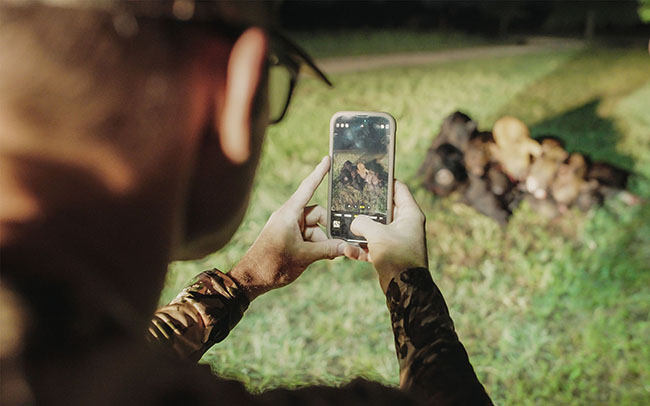
Just about the time we thought we’d call it quits, we spotted a massive sounder of swine through the thermals. The hogs were packed tight a couple hundred yards from fence line and rooting through a field and tearing up the terrain as they usually do. Garret outlined individual fields of fire, then gave the word, and we all lit them up with precision, and then, with a little less precision. When the smoke cleared, a dozen hogs laid still.

Hunting teaches lessons you don’t always catch in the moment. Often you learn patience. Sometimes you learn how to move quieter, shoot straighter, or how to laugh when nothing’s going your way. This hunt reminded us that it’s not always about the numbers; it’s about the work you put into the hunt and the fellowship that accompanies and lingers long after the rifles are cleaned and the meat is on ice.
Until next time.
GET THE GEAR